Jump to section
- An Ongoing Continuum
- Preconventional Readers
- Preconventional Writers
- Emerging Readers
- Emerging Writers
- Developing Readers
- Developing Writers
- Beginning Readers
- Beginning Writers
- Expanding Readers
- Expanding Writers
- Literacy Guide References
An Ongoing Continuum
You will find descriptions of the first six stages of reading and writing development below. This continuum, developed by Dr. Campbell Hill, provides descriptors of what children can do as they progress through each stage of development. The reading and writing continuums offer a framework for the understanding of literacy development.
It is important to remember that reading and writing development takes time. Young learners need multiple reading and writing experiences to grow as literacy learners. Adults play a crucial role in facilitating children’s development and movement along the reading and writing continuums. Children will be at different stages at different times depending on a myriad of factors. As parents, we encourage you to really celebrate what your child can do as a developing reader and writer!
As you read through the descriptions of each continuum stage, look at the children’s writing and the types of books children typically read at each stage. Think about where your child is in his or her literacy development. Notice that each page includes a Parent Tips section where you will find great ideas for supporting your child’s literacy development at home. Once you know which stage your child is at, we encourage you to try out these fun tips to help your child grow as a reader and writer.
Your child’s teacher will use this continuum throughout the school year to guide your child’s literacy development and to talk about their progress with you. Teaching children skills that are beyond their developmental stage will not help them to develop at a quicker rate. It is important to support students within their current stage of development while providing rich, stimulating experiences.
Preconventional Readers
| Parent Tips: |
|---|
|
|
|
Preconventional learners display curiosity about books and reading. They enjoy listening to books and may have favorites. Childrenfocus mostly on illustrations at this stage as they talk about the story. They love songs and books with rhythm, repetition and rhyme.Students participate in reading by chiming in when adults read aloud, and children at this age often enjoy hearing the same stories readaloud over and over.
Preconventional readers are interested in environmental print, such as restaurant and traffic signs, labels and logos. Children hold books correctly, turning the pages as they look at the illustrations. They know some letter names and can read and write their first name.
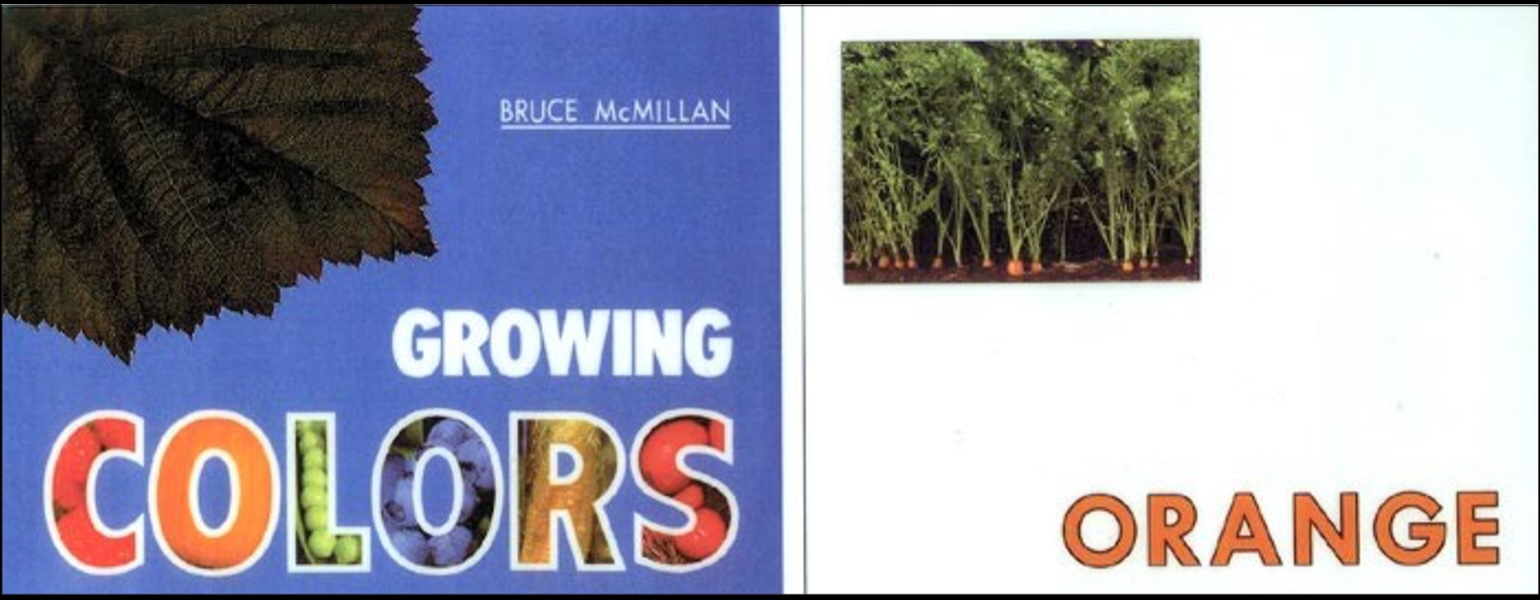
Preconventional readers will begin reading simple books like this one.
Preconventional Writers
| Parent Tips |
|---|
|
|
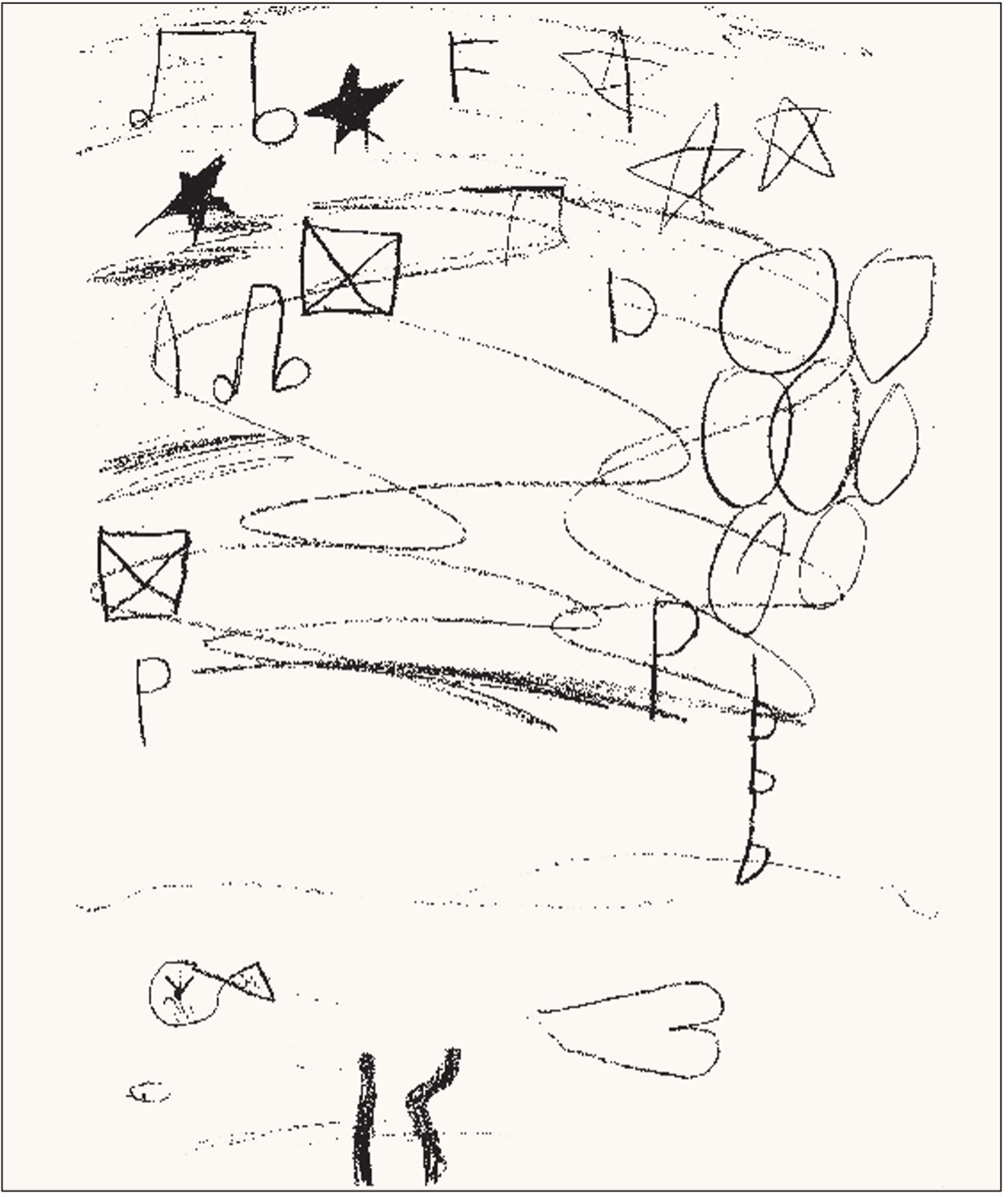
At the preconventional stage, children rely on their pictures to show meaning. They often pretend to write by using scribble writing. Children sometimes make random letters and numbers to represent words. Some children add "words" to their pictures to share meaning. They often tell stories about their pictures.
Emerging Readers
| Parent Tips: |
|---|
|
|
|
|
At the emerging stage, children are curious about print and see themselves as potential readers. They may pretend to read familiar poems and books. Children will rely on the illustrations to tell a story, but are beginning to focus on the print. They participate in readings of familiar books and often begin to memorize favorites. Children begin to make connections between books read aloud, and their own lives and experiences. They enjoy rhyming and playing with words. Emerging readers know most letter names and some letter sounds. They recognize some names, signs and familiar words. These children are often highly motivated to learn to read and may move through this stage quickly.
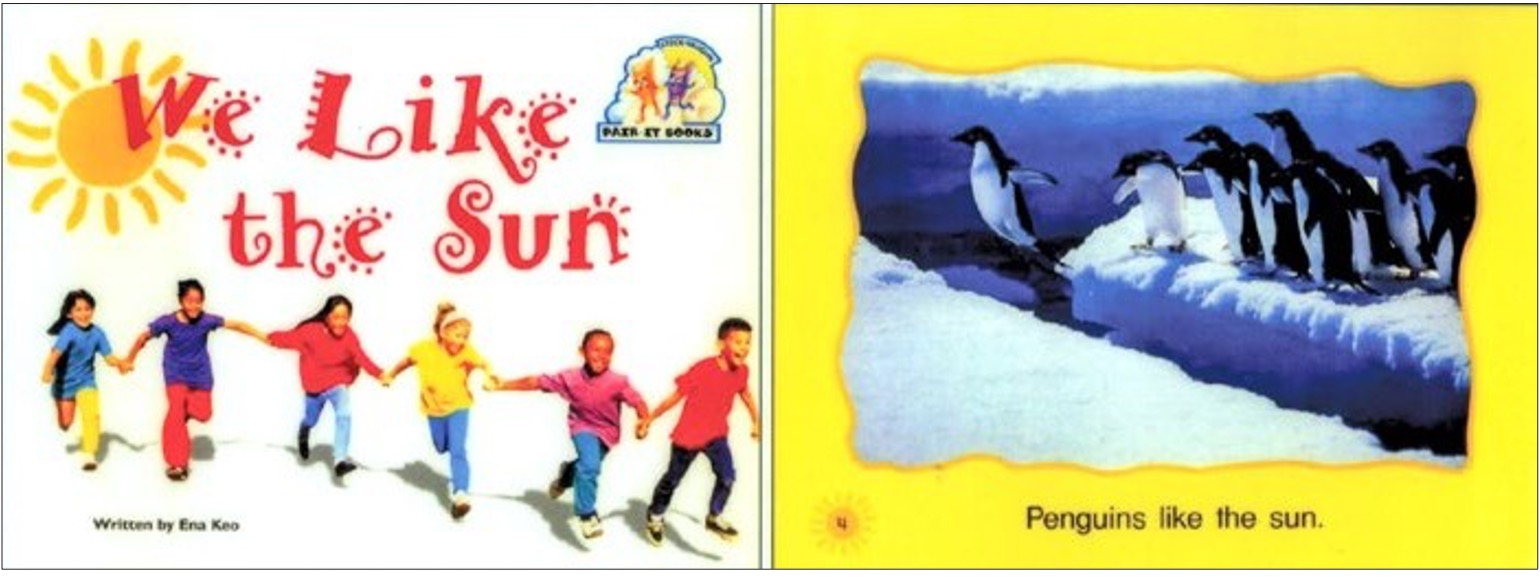
Emerging readers will begin reading simple books like this one.
Emerging Writers
| Parent Tips: |
|---|
|
|
|
These children begin to see themselves as writers. Some students begin to label their pictures with a few letters. They may write their name and some familiar words in a way that others can read. Students may write just the beginning or the beginning and ending sounds they hear. At the emerging stage, children often write everything in upper case letters. They may pretend to read their own writing, often elaborating to embellish their stories.
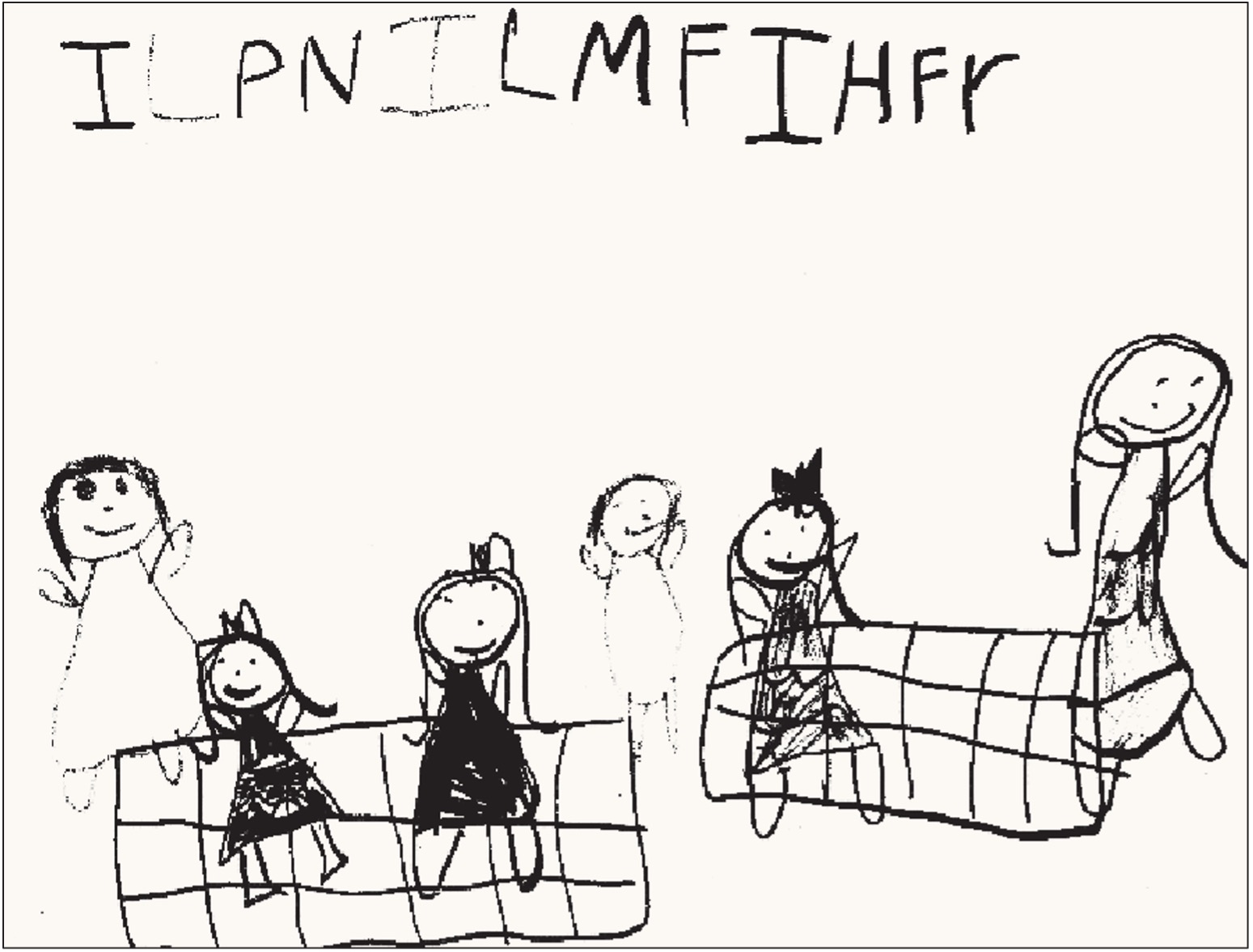
This student uses beginning and ending sounds to write: I like playing. I like my friends. I have friends.
Developing Readers
| Parent Tips: |
|---|
|
|
These children see themselves as readers. They can read books with simple patterns, such as Dear Zoo (Rod Campell), Quick asa Cricket (Audrey Wood), or Biscuit (Alyssa Capucilli). Later in this stage they can read books with patterns that vary more, like Elephant and Piggie (Mo Willems) and Rhyming Dust Bunnies (Jan Thomas). They begin to look at books independently for short periods (5–10 minutes) and like to share books with others. Developing readers know most letter sounds and can read simple words (such as "dog" and "me") and a few sight words (such as "have" and "love"). Recognizing patterns and word families helps readers generalize what they know about one word to similar new words. They use both print and illustrations to make meaning as they read. Children often read aloud word-by- word, particularly with a new text. They gain fluency with familiar books and repeated readings. These young readers can retell the main idea of a story and participate in whole group discussions of literature. This is another stage that children may pass through quickly.
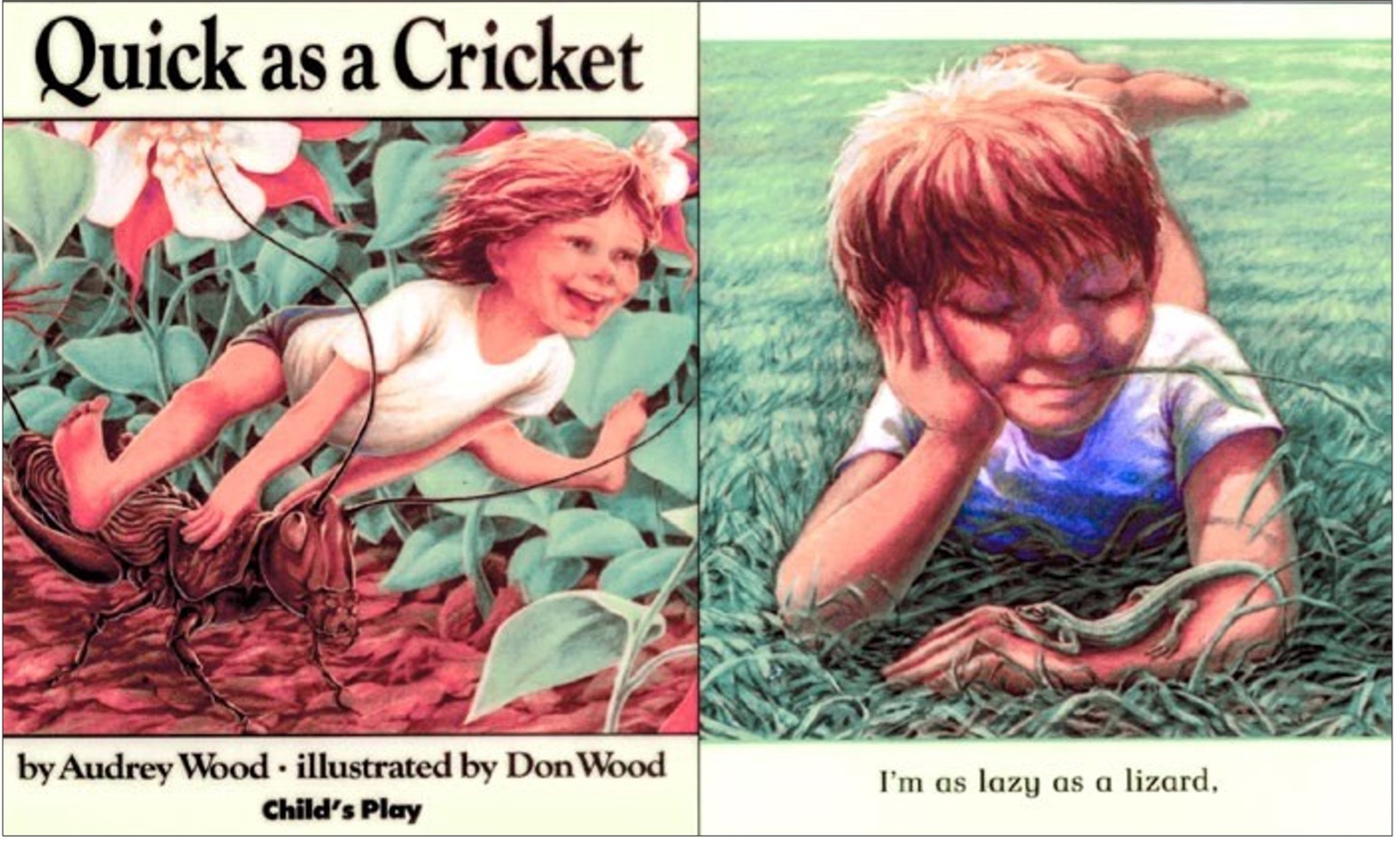
Developing readers will read stories like this one.
Developing Writers
| Parent Tips: |
|---|
|
|
Students at the developing stage write names and familiar words. They begin to write one or two short sentences, such as "MI DGPLS" ("My dog plays"). Developing writers use beginning, middle and ending sounds to make words. For example, learn might be written "LRn." This developmental reliance on the sounds of letters is called "invented spelling," "phonetic spelling" or "temporary spelling." At this stage, students spell some high frequency words correctly. Students often interchange upper and lower case letters and experiment with capital letters and simple punctuation. Their writing goes from left to right and begins to include spacing. Students are able to read their own compositions aloud immediately after writing, but later may not remember what they wrote.
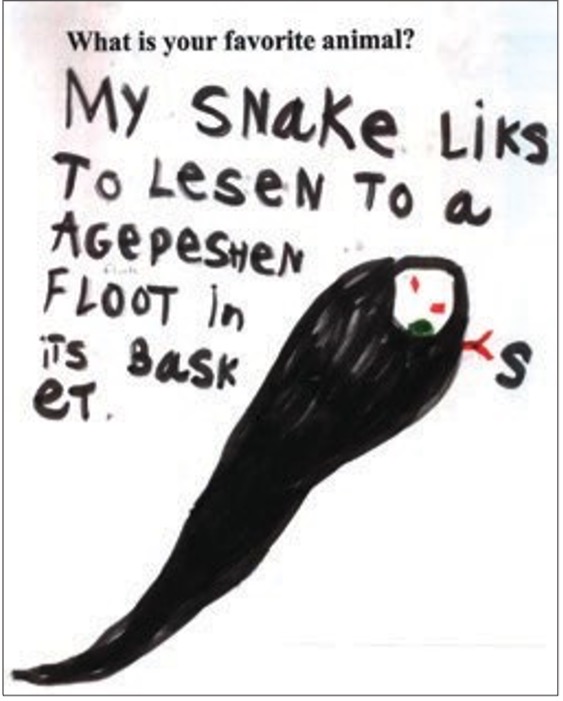
This developing writer uses conventional and phonetic spelling to write: My snake likes to listen to an Egyptian flute in its basket.
Beginning Readers
| Parent Tips: |
|---|
|
|
|
Beginning readers rely more on print than on illustrations to create meaning. When they read aloud, they understand basic punctuation,such as periods, question marks and exclamation marks. At first, they read simple early readers, like Fly Guy (Ted Arnold) and picturebooks with repetition, like Brown Bear, Brown Bear, What Do You See? (Bill Martin Jr.). Students take a big step forward when they learn to read longer books, like The Cat in the Hat (Dr. Seuss) or Sam and Dave Dig a Hole (Mac Barnett).
Later in this stage, they can read more difficult early readers, such as Frog and Toad books (Arnold Lobel) and more challenging picturebooks such Duck on a Bike (David Shannon). They often enjoy simples series books, such as the Katie Woo books by Fran Manushkinor the humorous Commander Toad series by Jane Yolen. Beginning readers take a developmental leap as they begin to integrate reading strategies (meaning, sentence structure and phonics cues). These children know many words by sight and begin to correct themselves when their reading doesn't make sense. They are able to discuss the characters and events in a story with the teacher's help. When they read simple non-fiction texts, such as Mighty Spiders (Fay Robinson) or Dancing with the Manatees (Faith McNulty), they are able to talk about what they can learn. It may take significantly longer for children to move through this stage since there is a wide range of text complexity at this level.
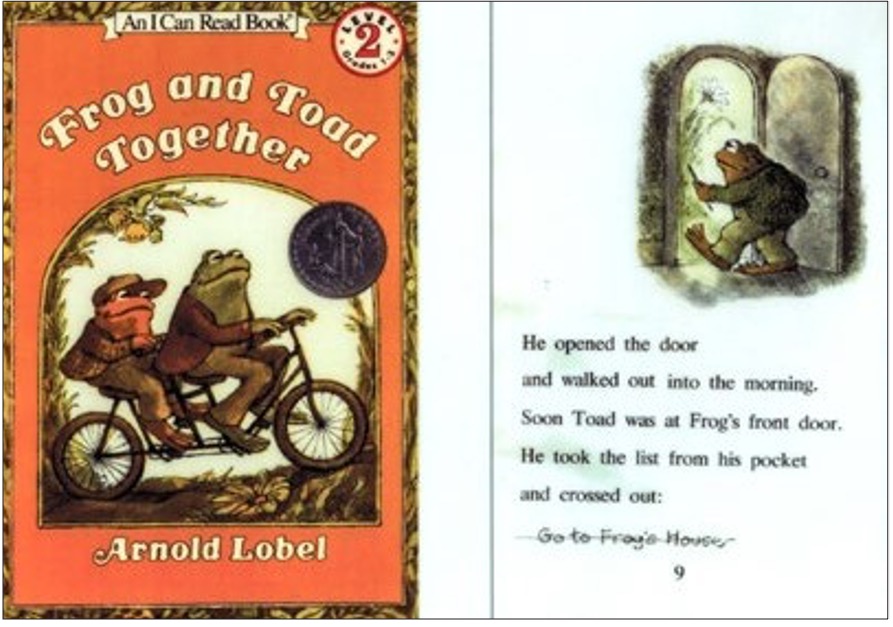
Beginning readers who are in the later part of this stage will read books like this one.
Beginning Writers
| Parent Tips: |
|---|
|
|
|
At the beginning stage, children write recognizable short sentences with some descriptive words. They can write several sentences about their lives and experiences or simple facts about a topic. Students sometimes use capitals and periods correctly. Many letters are formed legibly and adults can usually read what the child has written. Students spell some words phonetically and others are spelled correctly. They usually spell simple words and some high frequency words correctly as they become more aware of spelling patterns. Beginning writers often start a story with "once upon a time" and finish with "The End". Children may revise by adding details with the teacher's help. They enjoy sharing their writing with others. Students may stay at this stage longer than the previous ones as they build fluency.
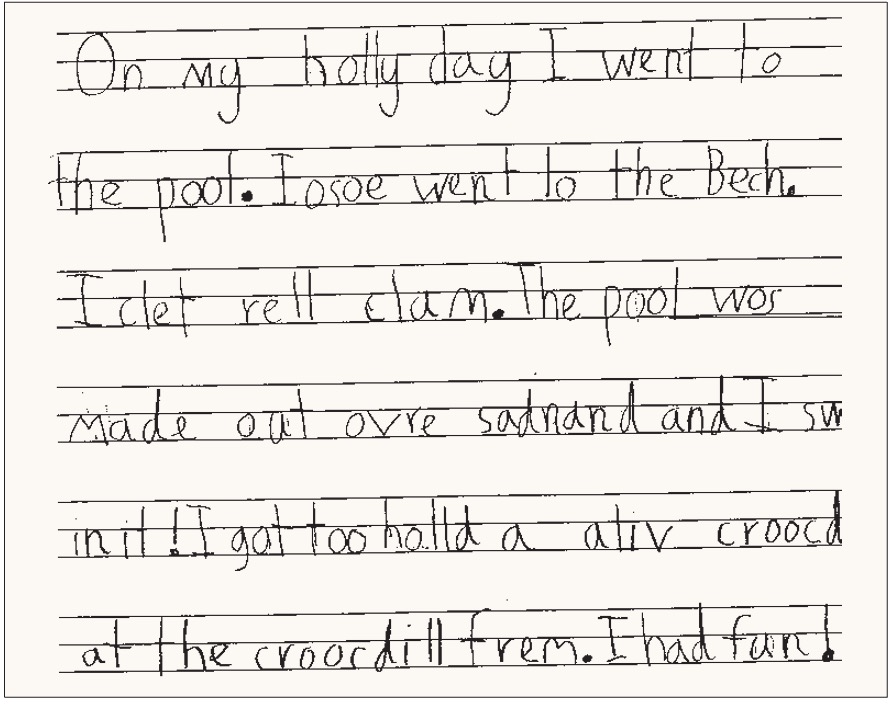
This beginning writer uses conventional and phonetic spelling to write:
On my holiday I went to the pool. I also went to the beach. I collected real clams. The pool was made out of sand and I swam in it! I got to hold a live crocodile at the crocodile farm. I had fun!
Expanding Readers
| Parent Tips: |
|---|
|
|
|
At the expanding stage, students solidify skills as they read beginning chapter books. Many children read series books and reread old favorites while stretching into new types of reading. In the early part of this stage, they may read short series books, like Henry and Mudge or National Geographic Kids. As they build fluency, students often devour series books, like Cam Jansen (David Adler), Bailey School Kids (Debbie Dadey and Marcia Thornton Jones) or Kingdom of Wrenly (Jordan Quinn). They may also read non-fiction genres on a variety of topics such as literary non-fiction, biographies or even recipes. They read aloud fluently and are able to self-correct when they make mistakes or their reading does not make sense. They can usually figure out difficult words but are still building their reading vocabulary. At this stage, children use a variety of reading strategies independently. These students make connections between reading and writing and their own experiences. Expanding readers are able to compare characters and events from different stories. They can talk about their own reading strategies and set goals with adult help.
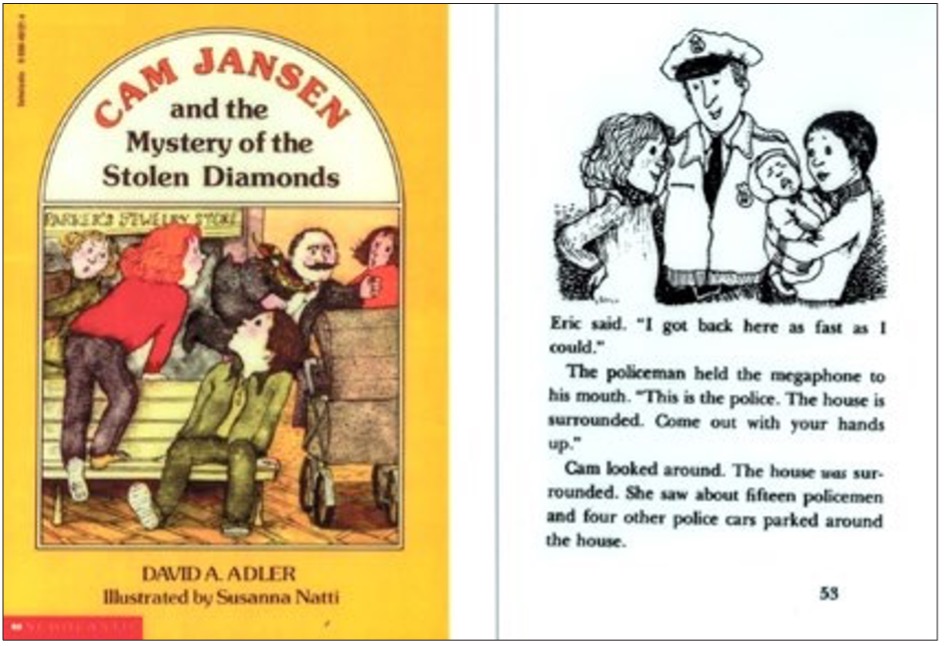
Expanding readers often enjoy series books like this one.
Expanding Writers
| Parent Tips: |
|---|
|
|
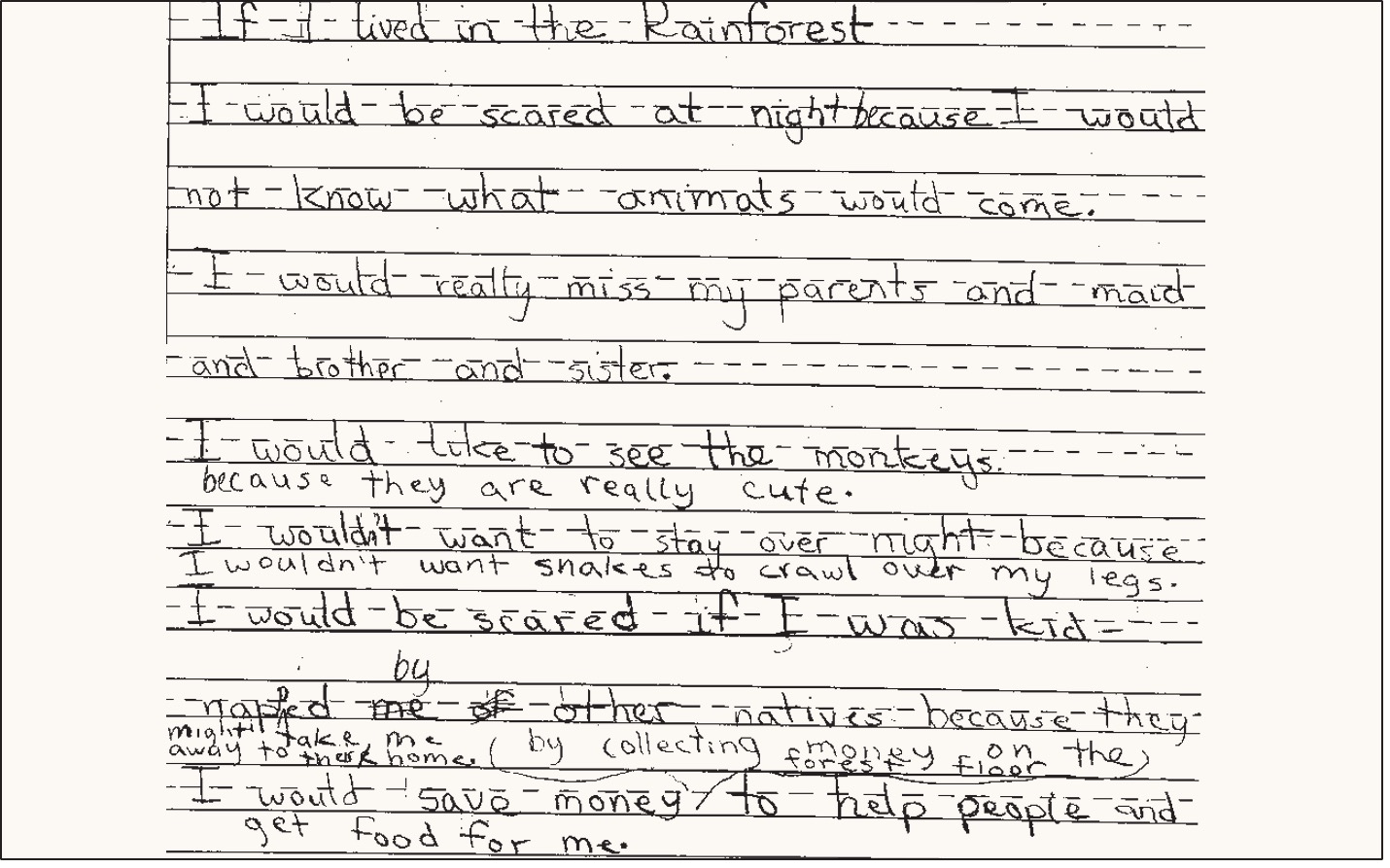
Students at this stage can write poems and stories about their experiences and interests, as well as short non-fiction pieces. They use complete sentences and their writing contains a logical flow of ideas. Their stories sometimes contain a beginning, middle and end. Expanding writers can add description, detail and interesting language with the teacher's guidance. They enjoy reading their writing aloud and are able to offer specific feedback to other students. Their editing skills begin to grow, although students may still need help as they edit for simple punctuation, spelling and grammar. Their writing is legible and they no longer labor over the physical act of writing. Students spell many common words correctly as they begin to grasp spelling patterns and rules.
Here is a sample of quality titles to enjoy with your children. This is not an exhaustive list but gives an idea of books that may be interesting to students of this age.
| Picture Books | Informational Books | Favorite Authors |
|---|---|---|
Stuck The Night Gardener Little Pea Shortcut Chalk Knuffle Bunny Extra Yarn Horrible Bear! | Elephants a book for children Ivan: The Remarkable True Story of the Shopping Mall Gorilla One Tiny Turtle Gentle Giant Octopus National Geographic Kids Magic School Bus series Weird But True series | Todd Parr Mac Barnett Amy Krouse Rosenthal Kate DiCamillo Cynthia Rylant Kevin Henkes Marla Frazee Jon Klassen Peter Brown Mo Willems Patricia Polacco Dav Pilkey |
| Poetry | Humor | Fantasy |
|---|---|---|
Winter Bees and Other Poems of the Cold Where The Sidewalk Ends It’s Raining Pigs and Noodles Water Dance You’ll Read to Me and I’ll Read to You | Franny K. Stein Ivy and Bean Captain Underpants Judy Moody & Stink The 13-Story Treehouse | Kingdom of Wrenly Geronimo Stilton Spiderwick Nathaniel Fludd, Beastologist Time Warp Trio Magic Tree House |
| Graphic Novels | Mystery | Beloved Character Series |
|---|---|---|
Owly Zita Binky the Spacecat Babymouse Tiny Titans Grimm graphic novels | A-Z Mysteries Cam Jansen Jigsaw Jones Greetings From Somewhere Nancy Drew and the Clue Crew | Mercy Watson Fly Guy Elephant and Piggie Henry and Mudge Poppleton Pinky and Rex |
Literacy Guide References
Heroman, C. Jones, C. 2010. The Creative Curriculum for Preschool. Washington DC: Teaching Strategies.
Neuman, Susan B., Carol Copple and Sue Bredekamp. 2002. Learning & Read and Write: Developmentally Appropriate Practices for Young Children. Washington, D.C.: National Association for the Education of Young Children.
Fountas, I. and Gay Su Pinnell. 2011. TheContinuum ofLiteracy Learning. Portsmouth, NH: Heinemann.
Hill, B.C. 2001. DevelopmentalContinuums: AFramework forLiteracy Instruction and Assessment K-8. Norwood, MA: Christopher-Gordon.
Common Core State Standards. 2010. www.corestandards.org/ELA-Literacy/.
Calkins, L. 2013. Units of Study for Primary Writing. Portsmouth, NH: Heinemann.
Wood Ray, K. 2006. Study Driven. Portsmouth, NH: Heinemann.
Calkins, L. 2015. Units of Study for Primary Reading. Portsmouth, NH: Heinemann.
Glover, M. 2009. EngagingYoung Writers. Portsmouth,NH: Heinemann.
Fountas, I. and Gay Su Pinnell. 1996. Guided Reading: Good First Teaching for all Children. Portsmouth, NH: Heinemann.
Contributing Authors: Bonnie Campbell Hill, Madeleine Maceda Heide, Ann E. Freeman, Maggie Moon, Ben Hart, Nate Dennison, Jill Kaufman, Denise Dyette, Francesca Cecchi, Margo Sommerlad, Laura Chesebro