
Jump to section
- Reception 1 Literacy Components
- Reception 2, Grade 1 and Grade 2 Literacy Standards
- How to Support Literacy Development Outside of School

We teach and assess according to our HKIS English Language Arts taxonomy, which is informed by Marzano's ELA Critical Concepts and the Common Core Standards(U.S.A.). The HKIS English Language Arts taxonomy details the most important learning we expect students to demonstrate over time and guides the teaching we emphasize at
the HKIS Lower Primary division. Overall, the goal is to produce literate students who can listen, speak, read and write across a range of content areas (social studies, science, math, religious education) and beyond formal schooling, into their professional and personal lives. We believe that rich literacy skills enrich all facets of life. Teachers in lower primary plan their lessons through with a variety of literacy routines(workshop, small group, read aloud, shared reading, shared writing) that teach the learning goals and skills. These routines are based in academic research and have supporting evidence that they work in classrooms.
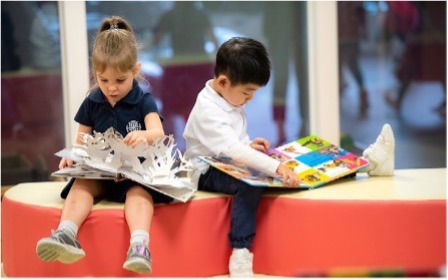
Reception 1 Literacy Components
- Identity: “I am a reader. I am a writer.”
- Oral language: speaking and listening throughout the day, following directions, conversations with peers during play
- Agency: language and literacy as a way of learning more and expressing self
- Knowledge about the world: vocabulary and language
- Phonological awareness: being able to hear the parts of words and the sounds in the English language, rhyming, hearing individual words in sentences, clapping the syllables in longer words
- Print: letters and words, exposure to a variety of books and genres, writing a variety of books, knowing the parts of books
- Comprehension: talking out loud about their thinking and understanding of stories and text
Reception 2, Grade 1 and Grade 2 Literacy Standards
- Literacy Foundational Skills:
o Phonemic awareness: being able to segment and blend sounds in words, which supports phonics understanding
o Phonics/Decoding: making the connection between sounds and letters in order to read words, “sound out” new words
o Spelling: how to use phonics for spelling regular and irregular words
o Conventions: capitals, punctuation
o Grammar: how sentences are made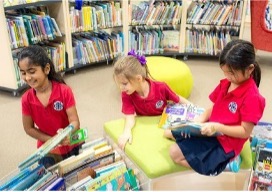
- Comprehension and Analysis (listening and reading):
o Listen to and read narrative text
▪ Main idea of the story, perhaps a character lesson
▪ Finding the beginning, middle, end of stories
▪ Characters, setting
o Listen to and read opinion text
▪ Main idea of the text, the opinion
▪ Finding the supporting details for the opinion
o Listen to and read informational texts
▪ Main idea of the text, what ideas are being taught
▪ Finding the matching details of what is being taught
o Analyse language meaning
▪ Noticing new words and vocabulary that match the topic
▪ Upper grades notice parts of words, like affixes - Composition and Communication (speaking and writing):
o Tell and write narrative text
▪ Stories with a beginning, middle, and end
▪ Including characters and appropriate settingso Tell and write opinion text
▪ Overall opinion
▪ Supporting reasons and details
▪ Logically organized
o Tell and write informational texts
▪ Overall main idea
▪ Supporting facts and details
▪ Logically organized
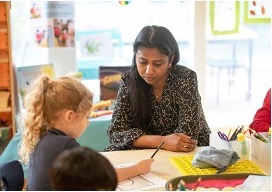
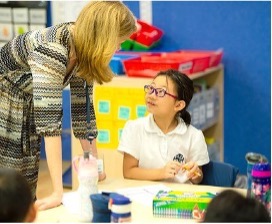
How to Support Literacy Development Outside of School
Continue to read to and with your child, regardless if they can already read. You model fluency (reading with a good pace and expression) as well as more difficult grammar structure. Discuss the events, facts and characters of the books. Make predictions as you read, and check them as you continue reading the book. In addition to academic enrichment, this important time creates a bonding ritual that will lead to warm memories!
Talk to your child when you are out in the world! That way, they learn more authentic vocabulary words in an authentic setting. For instance, if you are near a body of water, you might talk about all the vessels in the water (boat, ship, ferry, dingy, junk boat, police boat, cruise ship.) In this way, they expand their knowledge about the topic through learning more details.
Tell stories with your child. If you are in a new place, notice something out loud. You can say something like, “Wow, look that beautiful tree! I wonder what animals live in it.” Your child can use their imagination to add to the story, or perhaps you can use reference books and technology to find out the facts about what animals might use the tree.